Why Do Stress and Sleep Feel So Hard to Manage Today?
Stress is a normal part of life. Deadlines, long workdays, constant notifications, workouts, family responsibilities, and simply having too much on your mind can keep your body and brain switched on for longer than they should be. And when stress builds up, sleep can often take the hit too.
Some common reasons include:
- A constantly active mind – Even when the day is over, work, responsibilities, and tomorrow's to-do list can keep your mind running.
- Too much screen time – Phones, laptops, and late-night scrolling can make it harder to wind down and maintain a healthy sleep routine.
- Irregular sleep schedules – Sleeping and waking at different times every day can make it harder for your body to settle into a consistent rhythm.
- Everyday stress – Ongoing mental and physical stress can affect relaxation, mood, energy, and sleep quality.
- Not enough recovery – Exercise, work, travel, social commitments, and busy schedules all demand energy. Without enough downtime and quality sleep, recovery can suffer.
- Nutritional gaps – Nutrients such as magnesium play important roles in normal nervous system function, muscle relaxation, and overall wellbeing.
The tricky part? You don't always realise how much stress is affecting you until you're lying in bed, tired but unable to switch off.
That's why supporting relaxation and healthy sleep as part of your everyday routine can make a meaningful difference.
B. Why supplements, and which ones?
A healthy sleep routine, balanced diet, regular movement, and managing daily stress should always come first. But even with good habits, getting enough of certain nutrients or using targeted ingredients can provide additional support.
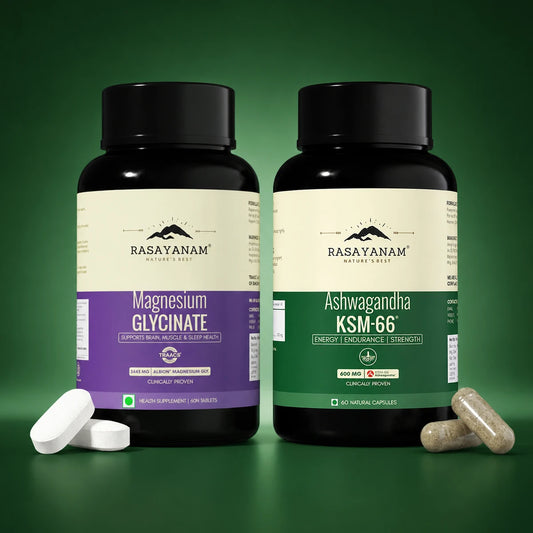
Here's what each of our supplements does, and why it's on this page:
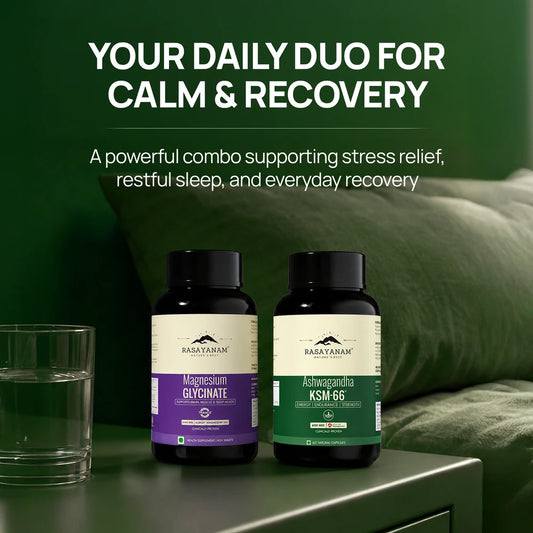
Magnesium is involved in over 300 enzymatic processes in the body, including normal nervous system function, muscle function, energy production, and sleep regulation. It also plays an important role in helping the body relax and maintain a healthy stress response.
Our Magnesium Glycinate provides 440mg elemental magnesium (100% RDA) in a highly bioavailable chelated form (TRAACS® by Albion® Minerals), designed for superior absorption and gentle digestion, making it suitable even for sensitive stomachs. Magnesium glycinate is known for its calming profile and is commonly used in evening routines to support relaxation and sleep quality. It supports muscle recovery, reduces occasional cramps, promotes nervous system balance, and contributes to overall relaxation and sleep quality.
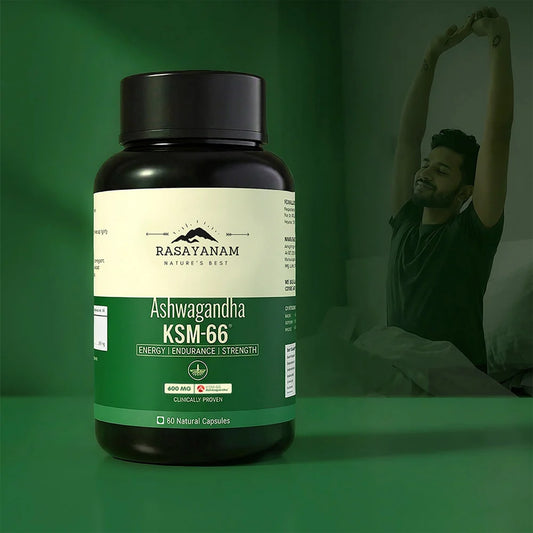
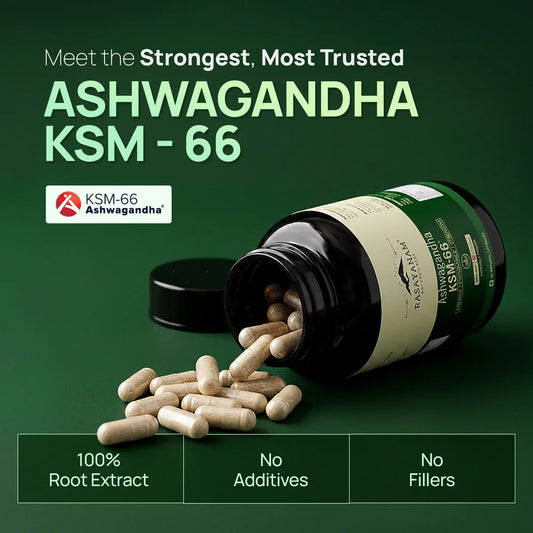
Ashwagandha is a powerful adaptogenic herb traditionally used in Ayurveda to help the body adapt to everyday stress. KSM-66® Ashwagandha is a clinically studied, full-spectrum root extract, standardised to 5% withanolides, ensuring consistent potency and efficacy.
It is backed by multiple human clinical studies, with a clinically effective dose of 600 mg per day, shown to support stress reduction, improved sleep quality, and enhanced mental wellbeing. KSM-66® is also known to help support cortisol balance, helping the body maintain a calmer internal state during periods of physical or mental stress. Unlike generic extracts, KSM-66® is derived only from the root (no leaves), preserving the traditional profile while ensuring high safety and bioavailability. It supports the body's natural stress response, may help improve sleep onset and quality, and promotes a more balanced mood and mental clarity over time.
C. Food & Lifestyle Tips For Better Sleep & Less Stress
- Eat more of:
- Magnesium-rich foods like nuts, seeds, legumes, and leafy greens
- Protein-rich foods
- Fruits and vegetables
- Whole grains and other minimally processed foods
- Adequate water throughout the day
- Balanced meals at regular times
- Watch out for:
- Too much caffeine, especially later in the day
- Heavy meals close to bedtime
- Excess alcohol
- Late-night scrolling and screen time
- Irregular sleep timings
- Working right up until bedtime
- Build a better wind-down routine:
- Keep a fairly consistent sleep and wake time
- Get some daylight and movement during the day
- Exercise regularly, but give your body time to recover
- Dim the lights and reduce screen time before bed
- Try reading, stretching, breathing exercises, or another calming activity
- Keep your bedroom dark, quiet, and comfortable
- Give yourself enough time for 7–9 hours of sleep