




















Fenugreek Extract vs Seeds: Key Differences Explained
 6 mins read

Methi is one of those ingredients that you will find in nearly every Indian home. But how often do we think about what's actually inside those tiny seeds? Some people soak it overnight, and some include it in their meals. More people are turning to taking fenugreek capsules for men's health. However, while both may appear similar: 500 mg of methi seed powder and 500 mg of fenugreek extract, they are not the same.
So, when a household ingredient we are familiar with is made into a concentration-rich dietary supplement, what modifications happen? The fenugreek extract vs seeds debate can roughly be categorized into three points: the level of concentration, the composition of the ingredient, and how the ingredient is used. Let’s look at the main differences and what research actually tells us.
1. Same Plant, Different Composition: Fenugreek Extract vs Seeds
Though they both come from Trigonella foenum-graecum (fenugreek), they differ in how they are made.
Methi seeds are whole dried seeds that contain fiber, proteins, carbohydrates, saponins, flavonoids, alkaloids, and 4-hydroxyisoleucine, which has been investigated for its possible role in glucose metabolism.
Fenugreek extract is obtained from the seeds of these plants. This process separates out certain compounds in the plant, which can appear in high quantities depending on the extraction method used.
This is the fundamental difference between fenugreek extract and seeds: one provides pure seed composition in its original form, while the other one offers chosen active ingredients in a highly purified and concentrated version.
2. What Actually Changes? A Quick Comparison
|
Feature |
Methi Seeds |
Fenugreek Extract |
|
Processing |
Dried whole seeds |
Processed to isolate compounds |
|
Composition |
Fibre, protein and plant compounds |
Selected concentrated constituents |
|
Concentration |
Naturally occurring levels |
Can be higher |
|
Standardisation |
Usually not specified |
Can be standardised |
|
Common use |
Cooking and food |
Supplement formulations |
An important distinction: Concentrated doesn't automatically mean more effective. The quality of the raw material, extraction process, and retained compounds matter just as much.
3. Standardized Fenugreek Extract: Why Does It Matter?
Extracts can vary. Standardized fenugreek extract ensures that a certain level of particular marker compounds exist within the ingredient, making it easier for manufacturers to ensure product consistency.
Fenugreek naturally contains steroidal saponins. Some extracts will be standardized to contain a certain amount of saponins, or other markers.
So an extract containing 350 mg of an ingredient at 50% standardization means there will be more of the active ingredient than 350 mg of regular seed powder. This gives information on the concentration of the markers.
This can help with comparing the different supplement formulations and researching results; however, this does not prove clinical effectiveness.
4. Fenugreek Extract vs Powder: Is There a Difference?
Yes, and the distinction is simpler than it sounds.
Fenugreek powder is made by drying and grinding the seeds. It retains much of their original composition, including fiber and other nutrients.
In contrast, fenugreek extract vs powder is a comparison between whole-seed material and selectively extracted compounds.
-
Seeds: Used whole in cooking or soaked overnight.
-
Powder: Ground seeds that can be mixed into food.
-
Extract: Processed to concentrate selected botanical constituents.
Neither is automatically better. It depends on the intended use.
5. Methi Seeds vs Capsules: Which Should You Choose?
It really comes down to convenience and consistency when deciding between methi seeds and capsules.
Seeds can be roasted, soaked, or added to everyday meals. Capsules provide a measured quantity without changing cooking habits. However, capsules may contain either seed powder or concentrated extract.
Before choosing, check whether the label mentions:
-
Seed powder/fenugreek seed extract
-
Standardized and marker percentage
-
Quality of ingredient and testing
-
Evidence-based research on this specific extract
This makes the comparison of fenugreek extract vs seeds more meaningful than simply assessing quantities in grams.
6. What Does Research Say About Fenugreek for Men?
Fenugreek has been receiving attention for its potential impact on testosterone, physical performance and men’s well-being.
In 2020, one randomized, double-blind, placebo-controlled trial was published in the Journal of Complementary and Integrative Medicine. 57 healthy males participated in the study, consuming either 400 mg or 500 mg of fenugreek extract daily or a placebo for 60 days.
The results showed some improvements with grip strength, anxiety, and quality of life factors.
However, this was a small sample size, so the results can’t be generalized to all fenugreek products. Another reason why it’s important to mention that they’re using whole seeds as opposed to specific extracts.
7. Looking Beyond Fenugreek: Rasayanam Testoboost Max
Understanding the formulation is just as important when looking at plant-based ingredients in male well-being supplements.
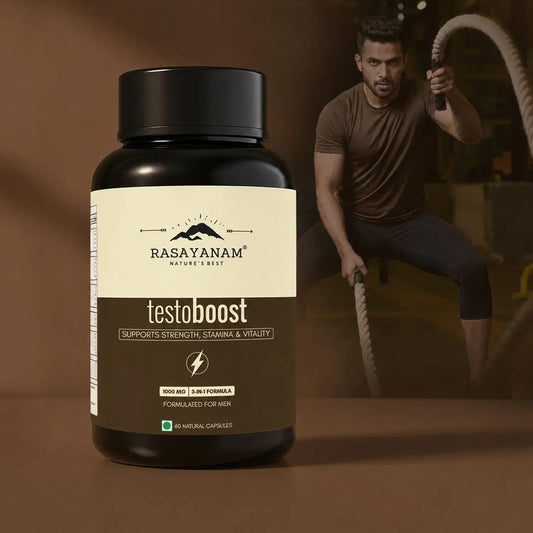
Rasayanam Testoboost Max contains 350 mg fenugreek extract (50% fenusides), 200 mg panax ginseng, 6 mg boron, 17 mg zinc, and 100 mg astragalus extract.
This formulation helps to combine ingredients that are known to support energy, stamina & vitality in males.
Take a look at the formulation here: Rasayanam TestoBoost Max.
Overall, it is not simply about choosing a more concentrated form of fenugreek. Understanding the process behind the ingredient, the quality of the ingredient, and how it has been formulated will give you a better understanding of how it can help support your goal.
Quick Takeaways
-
Methi seeds are the natural composition of whole seeds.
-
Fenugreek extract is processed and has some chosen (and possibly concentrated) components.
-
It can help guarantee consistency.
-
Fenugreek extract is processed and has a different composition than the powder.
-
Capsules may be powder or extract depending on what is used.
Frequently Asked Questions:
1. Does fenugreek lose its benefits when cooked?
Cooking can cause some of the heat-sensitive components to break down; however, fenugreek still provides fiber and other nutrients. The amount it affects will depend on cooking time, temperature, and preparation method.
2. Does fenugreek boost testosterone naturally?
There have been some clinical studies showing an improvement in testosterone-related measures after taking certain fenugreek extracts. However, the evidence is unclear. Fenugreek should not be considered a treatment for testosterone.
3. What is the difference between fenusides and total saponins?
Fenusides are a specific type of saponin that is derived from fenugreek. It is a marker used within some standardized extracts. Total saponin is a measure of several saponin compounds.
4. Can fenugreek be combined with other herbal supplements?
This depends on what they contain. Taking multiple supplements without knowing what they contain could increase the chance of negative effects. Speak to a health care professional who can advise if it is a suitable combination.
5. Why would two fenugreek supplements have different effects?
Extraction methods, standardization, levels of concentration, quality of the initial material, and other ingredients can all vary. This means that 2 products claiming to be fenugreek extract may not be the same or research backed.
Disclaimer: This article is for informational purposes only and does not replace medical advice. Adults should consult a healthcare professional before supplementation, particularly if they take medication or have existing medical conditions.


