

















Ginseng vs Ashwagandha: Which One Is Better?
 7 mins read

Sometimes it’s not that you are not tired enough; it’s that you can’t fall asleep, you can’t concentrate at work and you’re exhausted halfway through the day. Add to this the stress of commuting and training programmes, and it is easy to see why energy supplements have become so popular in India.
Two common plant-based ingredients when the topic comes up are Panax ginseng and ashwagandha. Both are known for their ability to help with stress management, as well as in improving one's energy levels and physical performance. But are they as effective as each other? Which should you consider?
Ginseng vs ashwagandha, the two have similarities, but their active compounds, research, and benefits are very different.
What Is Panax Ginseng?
The plant Panax ginseng (or Asian Ginseng / Korean Ginseng) has been traditionally used to boost energy and promote general wellbeing.
It contains a range of biologically active compounds, most notably ginsenosides. These are currently being researched for their antioxidant properties, amongst others.
The possible benefits are
-
Energy and fatigue: Research suggests that ginseng may reduce general fatigue.
-
Cognitive function: It has been researched for its effects on attention and mental performance.
-
Physical performance: The effects on exercise capacity and recovery are still inconclusive, although being studied.
-
Metabolic health: Some research looks into its possible effects on blood sugar control.
What Is Ashwagandha?
Ashwagandha (Withania somnifera) is a natural ingredient that can help manage stress, improve sleep, and aid physical recovery.
The active compounds in the plant are called withanolides.
Potential benefits of ashwagandha:
-
Manage stress: It is known that some standardized extracts can decrease stress perception and lower cortisol.
-
Enhance sleep: Some studies indicate that it could be used to enhance sleep quality and duration.
-
Build muscles and speed up the recovery process: Clinical research proves that it can help build muscle mass and recovery.
-
Enhanced well-being: With reduced stress perception and enhanced sleep, it would contribute to better well-being.
Ginseng vs Ashwagandha: What's the Difference?
The most significant difference between these ingredients lies in what researchers have studied them for.
|
Parameter |
Panax Ginseng |
Ashwagandha |
|
Botanical name |
Panax ginseng |
Withania somnifera |
|
Active compounds |
Ginsenosides |
Withanolides |
|
Commonly researched for |
Energy, fatigue and cognition |
Stress, sleep and recovery |
|
Stress management |
Investigated for stress-related effects |
More direct clinical evidence |
|
Sleep support |
May cause insomnia in some individuals |
Studied for improving sleep quality |
|
Physical performance |
Evidence remains inconsistent |
Promising strength and recovery research |
These ginseng and ashwagandha differences explain why the two ingredients aren't necessarily interchangeable.
What Does Scientific Research Say?
In a 2023 systematic review and meta-analysis published in the Journal of Integrative and Complementary Medicine, 19 randomized control trials, including 2,413 patients, have been analysed to understand the role of ginseng and its products in fatigue. There have been some positive outcomes regarding general fatigue in certain analyses.
Ashwagandha also holds promise. In a 2021 systematic review including 491 people from seven trials, it has been seen that there are some forms of ashwagandha that improve stress and anxiety-related scores and decrease cortisol levels.
However, there may be different outcomes due to the type of extract, dose, and duration of the study. Not all supplements yield the same results.
Ashwagandha or Ginseng: Which Should You Choose?
The answer to ginseng vs ashwagandha is dependent on what the main area of support is.
1. Everyday stress: Ashwagandha has more direct clinical research around perceived stress and cortisol regulation.
2. Energy and fatigue: There has been research on panax ginseng in the context of general fatigue and energy-related outcomes, though the evidence is inconsistent.
3. For better sleep: Research on ashwagandha for sleep quality is much more promising, particularly for adults who struggle to sleep.
4. For strength and recovery: Both have been studied. Some extracts of ashwagandha have shown promising results in clinical trials.
So, in the battle of Panax ginseng vs ashwagandha, neither is superior. The choice is based on the desired benefit.
Can You Take Ginseng and Ashwagandha Together?
Both ingredients are commonly discussed as adaptogens, but combining them does not automatically make them more effective. Their active compounds and potential interactions differ. Combining extracts may also increase the possibility of unwanted effects.
Always check with a qualified healthcare professional before combining supplements, especially if you are taking medication or have an existing health condition.
Why Does Extract Quality Matter?
The supplements containing the same plant may vary not only in composition but also in concentrations. Before selecting one, you need to take into account issues such as:
-
The plant part: The formulation consists of roots, leaves, or both.
-
Standardization: Whether the active ingredients are identified.
-
Quality of the extract: Whether the process of extraction and its sources are disclosed.
-
Clinical research: Whether the specific extract has been investigated in human trials.
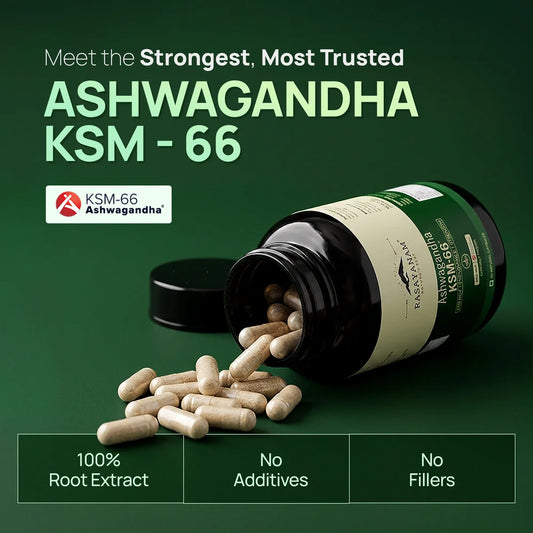
For instance, KSM-66® is an ashwagandha root extract that underwent research. The studies were devoted to the benefits of the extract for stress and physical performance.
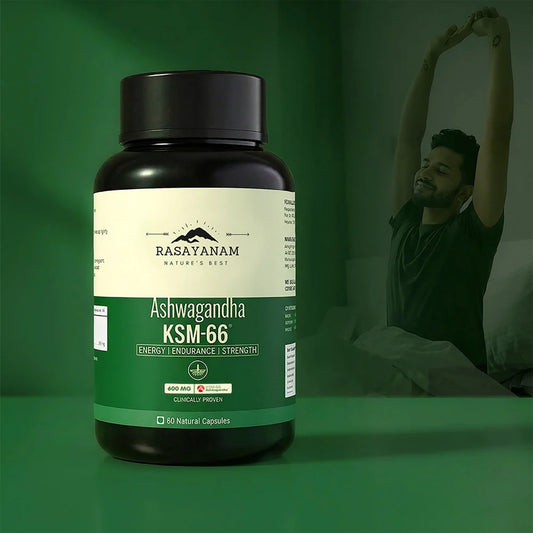
Rasayanam's Ashwagandha KSM-66 (600 mg) went through 48+ clinical trials with tested dosage of the extract and concentrates on stress relief, stamina, and recovery. Its formulation is also vegetarian and free from added fillers.
Final Takeaway
The ginseng vs ashwagandha comparison isn't about finding one universally superior ingredient.
-
Panax ginseng: More widely used and researched for improving energy, reducing fatigue and enhancing cognitive function.
-
Ashwagandha: It is more widely studied for stress, sleep, and recovery.
-
Both: Have different active compounds.
-
Extract Quality: It will depend on standardization, where the part of the plant comes from and the evidence behind it.
Understanding panax ginseng and ashwagandha differences will help you make an informed choice on which formulation is best to support your personal wellness goals.
Frequently Asked Questions:
1. Is Indian ginseng identical to Panax ginseng?
No. Indian ginseng is an alternative name for ashwagandha (Withania somnifera), while Panax ginseng refers to another species. Even though these two plants have similar names, they include different active ingredients.
2. Does the presence of a larger quantity of ginsenosides or withanolides imply that a certain supplement is more effective?
Not necessarily. A larger concentration simply refers to a bigger share of chosen compounds which doesn't mean that the absorption, effectiveness, and safety of the ingredients will also be better. Besides the actual extract and supporting clinical evidence, the quality standards also play an essential role.
3. What side effects can ashwagandha and ginseng have?
Ashwagandha may cause sleepiness, nausea, or digestive upset, and Panax ginseng may lead to insomnia and digestive problems. Both can have an interaction with some medications, and so professional guidance is important before use.
4. What are adaptogens? Are ginseng and ashwagandha adaptogens?
Adaptogens are a group of plant-derived compounds which are studied for their ability to help the body manage stress. Both ashwagandha and Panax ginseng are generally considered adaptogens. However, they contain different active compounds and will work differently in the body.
5. Can the same ashwagandha extract affect different people differently?
Yes. Results can vary based on an individual’s health status, stress levels, sleep habits, lifestyle choices, and differences in supplement formulations. The results of clinical studies are averages for groups and are not guaranteed to give the same individual experiences.
Disclaimer: This article is for educational purposes only and does not replace professional medical advice. Consult a qualified healthcare professional before starting supplements, especially if taking medication or managing a health condition. Supplements should not replace a balanced diet or medical evaluation of persistent fatigue and stress.


